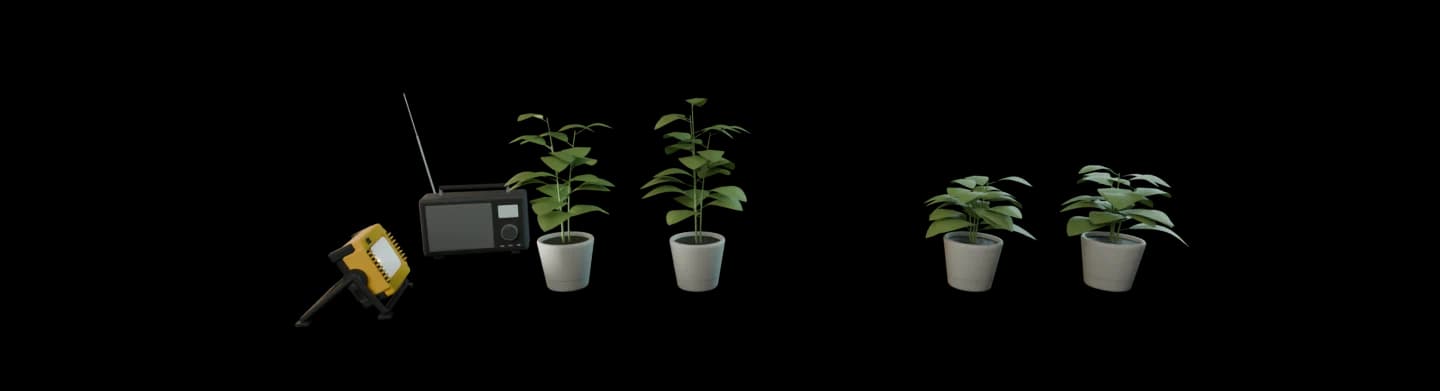
What do I see? Four plants. Two are taller. Both are closer to the radio. That's the observation. In this example, this version is reviewed and approved.
Suppose an AI rewrites it: Music made these plants taller. Wait. That's a different claim. The old approval stays with the old version.
And the lamp? The light could matter too. This image alone doesn't tell me the cause. The observation doesn't support the stronger claim.
So: the plants nearer the radio are taller. The cause remains open. The observation is still usable. This new version is assessed again.
Before publication, evidence, checks and human approval must match this version. All publication conditions must be met. More cautious wording alone isn't enough.
This exact version is published. The observation stays. The old approval doesn't follow. AIJIM connects evidence, checks and approval to what is actually published.
1 · published observation
The plants nearer the radio are taller.
The original version, evidence and human decision belong together.
Evidence: observation of heights. Human approval for this exact A.
2 · observation ≠ cause
Music made these plants taller.
A describes a height difference. B additionally claims that music caused it. The observation stays the same; no causal evidence is added. The human decision stays bound exclusively to A; B has no approval.
No approval for state B.
3 · same evidence, different meaning
Music made these plants taller.
All four plants, the radio and the light remain visible and unchanged. Light or other factors could also explain the difference. No cause is established. The same evidence can be considered again, but does not automatically support the stronger claim. Separately, the decision for A must not appear as a decision for B.
4 · editorial revision
The plants nearer the radio are taller. The cause remains open.
A person narrows the claim and makes a separate decision for this version.
5 · before publication
The plants nearer the radio are taller. The cause remains open.
The wording stays identical. All prerequisites bind this exact version; no abbreviated checklist replaces the complete rule.
6 · published reader version
The plants nearer the radio are taller. The cause remains open.
Editorial marks disappear without changing the wording. Evidence, checks, the decision and the predecessor remain as marginal references.
The observation stays.
The old approval does not follow the new claim.
- Evidence stays
- Observed heights, not evidence of a cause.
- Approval stays with A
- No transfer to the music claim in B.
- C is reassessed
- Its own checks and human decision.
AIJIM makes this relationship traceable: which claim was checked against which evidence and authorized by a person?
The timeline is an explanatory simplification: human authorization and all other publication prerequisites bind the same exact state. The checking phase does not change the version and is not a separate, subsequent approval step.
A, B and C represent complete publication candidates, condensed here into one sentence. AIJIM does not require a separate permit for every sentence. Keep two distinctions: observing a difference does not establish its cause; and a decision for A does not automatically authorize the materially changed B. The protocol does not determine whether music, light or something else caused it. Human approval alone replaces neither evidence nor the other publication prerequisites.
The steps are explanatory moments. Stepping back rewinds the example; it does not revoke a publication.